This case focuses on Gotion High-Tech, a leading lithium battery manufacturer aiming for carbon neutrality by 2040. Facing challenges like uneven energy efficiency across 20 bases, difficult monitoring of diverse media (water, gas), and lack of standardized systems, Jiangsu Huahai provided a customized instrument detection scheme.
Case Details
1. Customer Introduction
Gotion High-Tech is a manufacturing enterprise specialized in the lithium battery sector, headquartered in Hefei with its global R&D headquarters in Shanghai. Its core businesses cover power lithium batteries, energy storage, battery recycling, and battery materials. Globally, it has laid out 8 R&D centers and 20 manufacturing bases (including 10 major domestic battery production bases), boasting strong industrial and R&D capabilities.Founded in 2006, the company was listed on the Shenzhen Stock Exchange in 2015. In 2016, it undertook battery R&D projects commissioned by national ministries, accumulating solid technical expertise. It has clearly set the goal of achieving carbon neutrality by 2040 in response to the national dual carbon policy.
2. Customer Problems
Focusing on the balance between “energy conservation, carbon reduction” and “production efficiency”, the core issues are as follows:
Carbon Emission and Energy Consumption Pressure: The improvement of battery range has increased carbon emissions in the production process, requiring compliance with the 2030 carbon peaking target. Meanwhile, heat storage units, refrigeration stations, and coating & drying processes are high-energy-consumption links, posing great challenges to energy management.
Significant Resource Waste: Industrial and domestic wastewater is not efficiently utilized; positive and negative electrode materials are wasted during slurry mixing and cleaning; waste heat and cold energy from coating and liquid nitrogen vaporization remain untapped, leading to low energy utilization efficiency.
Lack of Monitoring Standardization: The 20 production bases have inconsistent energy efficiency levels and lack a unified energy consumption monitoring system, easily causing artificial energy waste due to management differences.
3. Solutions: Our Customized Instrument Detection Scheme
Based on "selection based on medium characteristics + balancing accuracy and cost", we address the monitoring challenges in a targeted manner:
Monitoring of Multiple Types of Water
Municipal water, chilled water, and medium-temperature water (conductive): Electromagnetic flowmeters are used to accurately measure flow, supporting water energy consumption statistics and energy-saving optimization.
Pure water (non-conductive): Turbine flowmeters are adopted to avoid monitoring blind spots and accurately track pure water consumption.
Optimization of Gas Monitoring
Compressed air and nitrogen: Vortex flowmeters (inaccurate in low-flow scenarios) are replaced with thermal gas mass flowmeters. These meters are suitable for low-flow conditions, balance accuracy and cost, and accurately capture actual gas consumption.
Promotion of Monitoring Standardization.
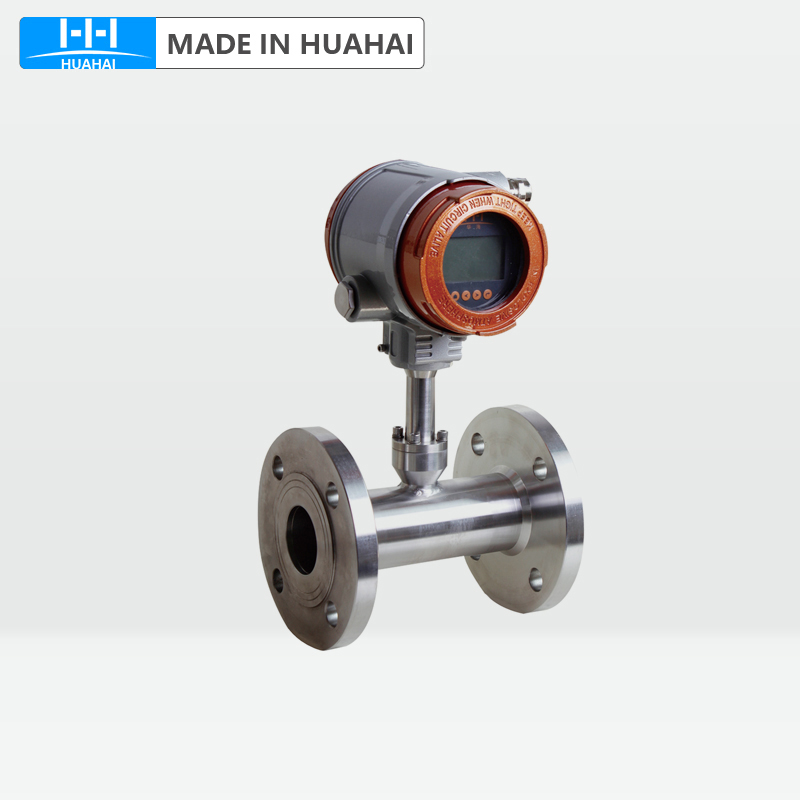 Thermal Gas Flow Meter
The above-mentioned instruments are uniformly deployed across the 20 production bases, establishing a standardized fluid energy consumption monitoring system and unifying data standards to support the implementation of the company-wide energy conservation and carbon reduction strategy.

 Thermal Gas Flow Meter


